Real implementation experience and practical blueprints for workflow automation, system integration, knowledge management, and architecture modernization.
A public sector organization needed workforce and timecard data to move reliably between payroll and planning systems. The goal was not another dashboard. The goal was fewer manual handoffs, better reconciliation, and operational confidence.
Workforce information, payroll records, timecard details, and planning updates lived across multiple systems. Manual synchronization created administrative overhead, delayed visibility, and reconciliation risk.
The enterprise needed a reliable process that could run repeatedly, recover from failures, preserve history, and alert stakeholders when exceptions required attention.
 Click to expand
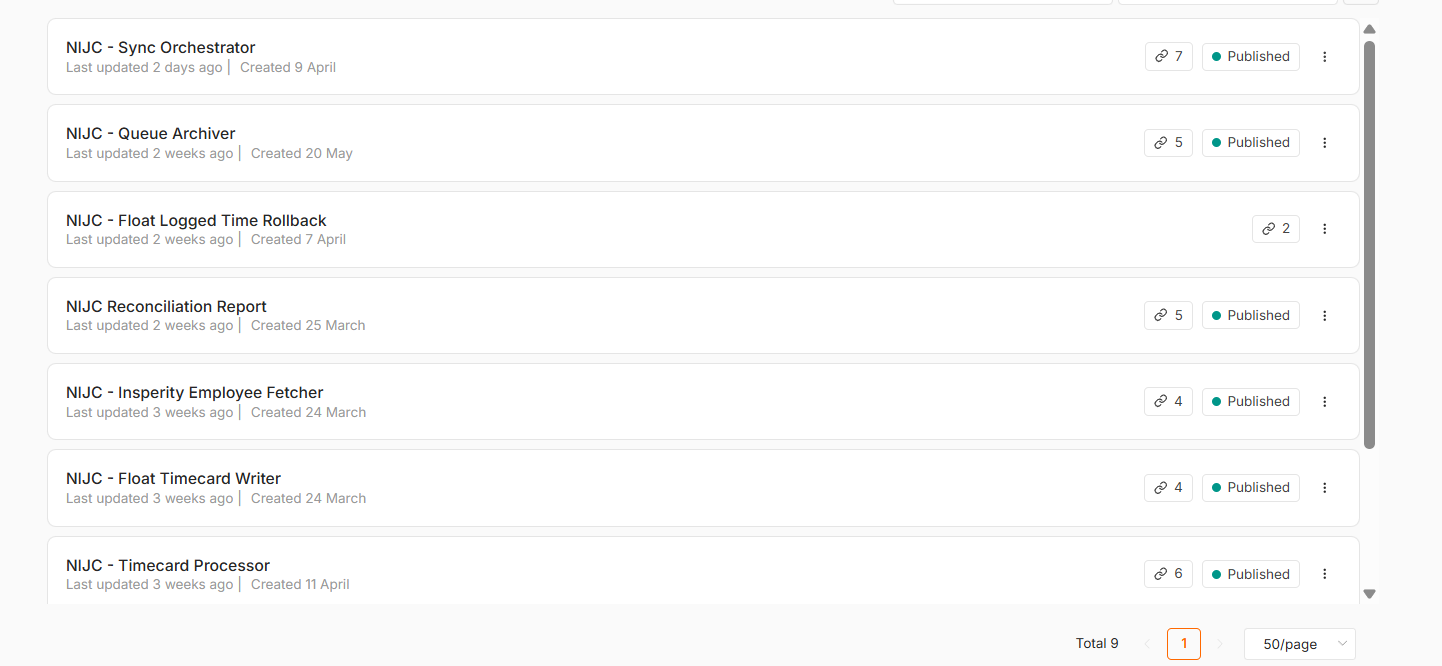
An enterprise workflow platform that extracts source data, stages records, processes queues, writes to the planning system, archives completed work, and sends reconciliation reports.
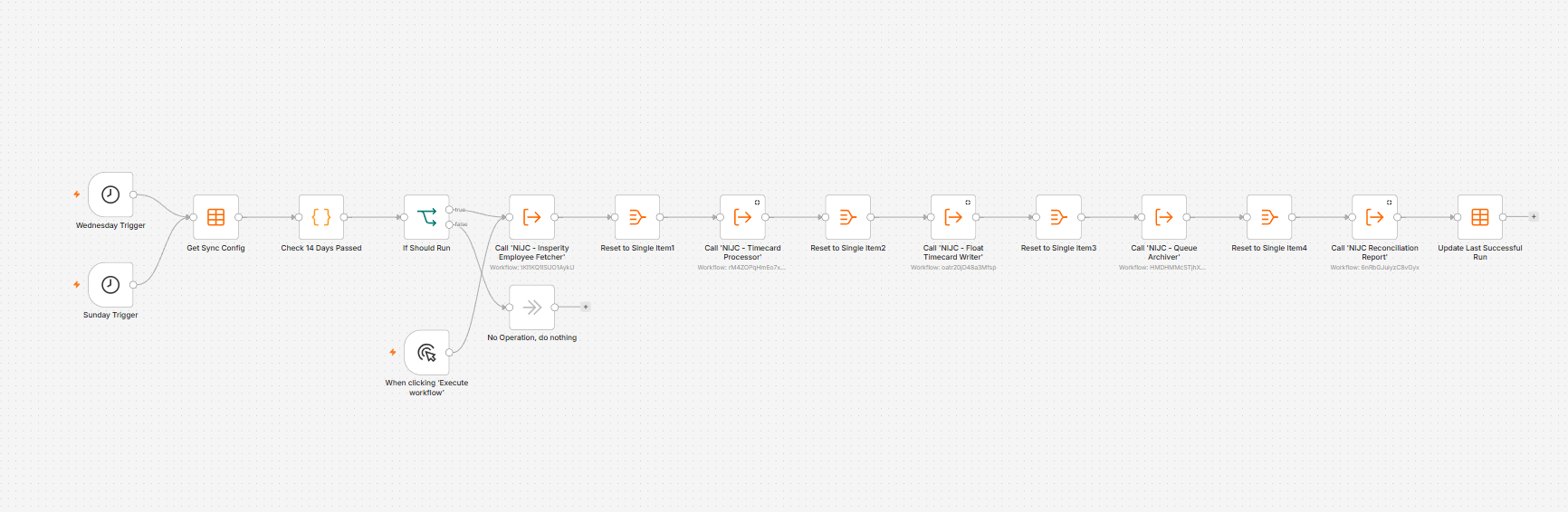
Coordinates execution, scheduling, cycle validation, workflow dependencies, and successful-run updates.
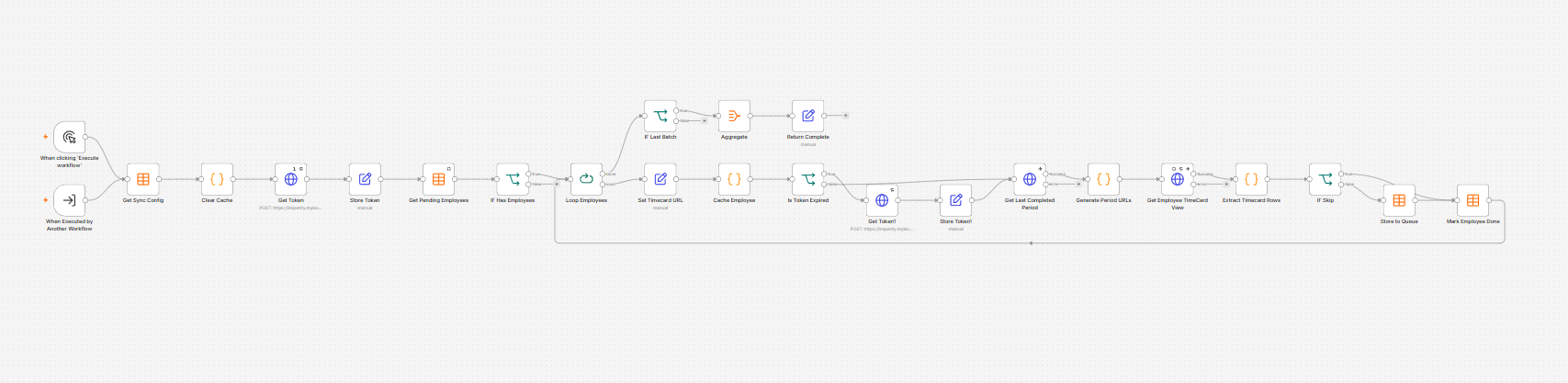
Retrieves employee data, handles token renewal, caches data, and prepares records for downstream processing.
Validates rules, transforms timecard records, and stores work into controlled queue tables.
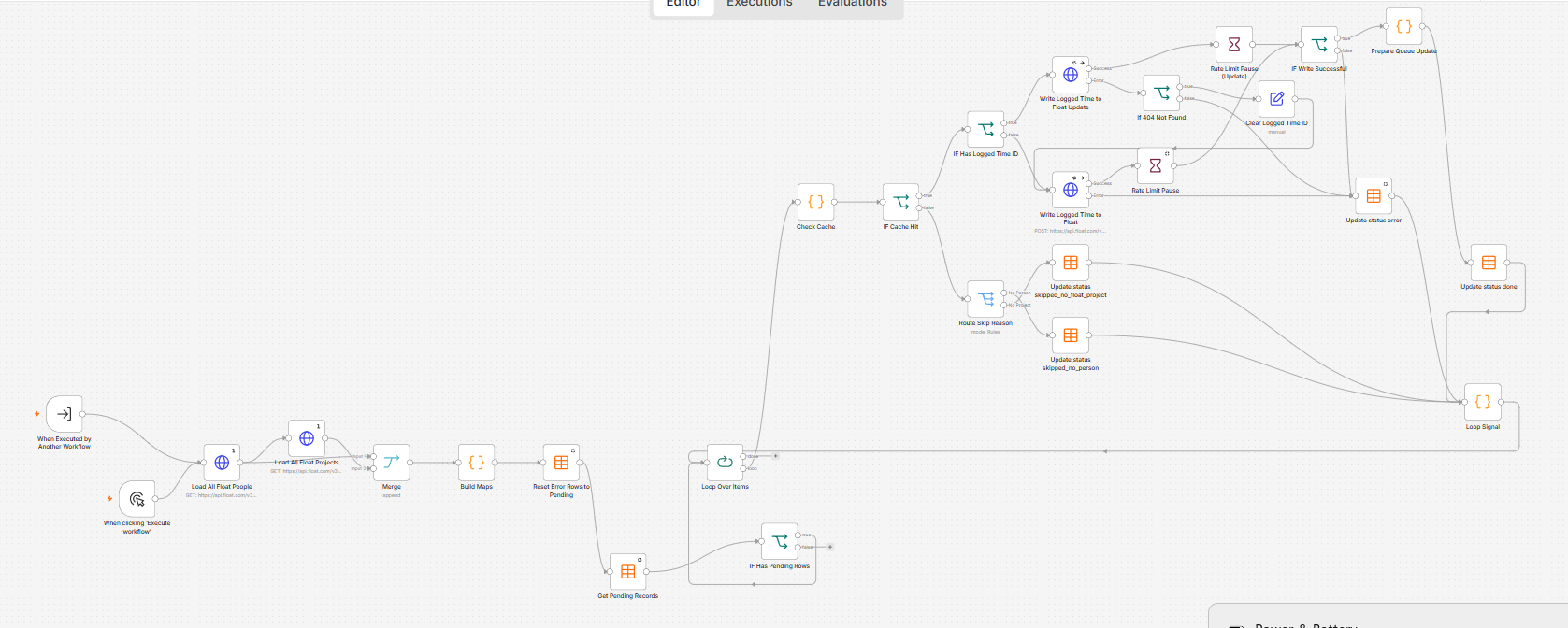
Writes logged time, updates existing records, handles skip logic, and tracks processing status.
Moves older queue records to archival tables while preserving operational history.
Reports successful runs, failures, archived records, and operational exceptions.
The implementation follows enterprise integration principles: controlled extraction, staging, queue processing, target writes, archival, reconciliation, and notifications.
These are the details that separate production automation from fragile scripts.
Handles transient API and workflow failures without immediately breaking the overall synchronization.
Supports controlled reversal when records need to be corrected, reversed, or reprocessed.
Supports controlled backfills and recovery periods when operational history needs to be reprocessed.
Alerts stakeholders when integration failures or data exceptions require human attention.
Representative workflow views from the automation platform. Click any image to open it in a lightbox.
These are not invented case studies. They are practical implementation patterns for common enterprise problems.
Business outcome: faster access to approved business knowledge.
Business outcome: faster lead response without more admin.
Business outcome: reliable visibility without spreadsheet-heavy reporting.
Business outcome: faster handoff from sale to delivery.
Business outcome: extend core systems without disruptive replacement.
Business outcome: fewer duplicate entries and cleaner operational data.
We can help map the business process, the systems involved, and the safest path to production.
Book Discovery Call